Qigong for Parkinson’s Disease
Qigong for Parkinson’s: Move Gently, Awaken Life
Parkinson’s disease can feel like your body is suddenly speaking a different language. Movements become smaller. Balance becomes less certain. Everyday tasks require more attention and energy. Yet even amid these challenges, the body retains an incredible ability to adapt, learn, and respond to gentle movement.
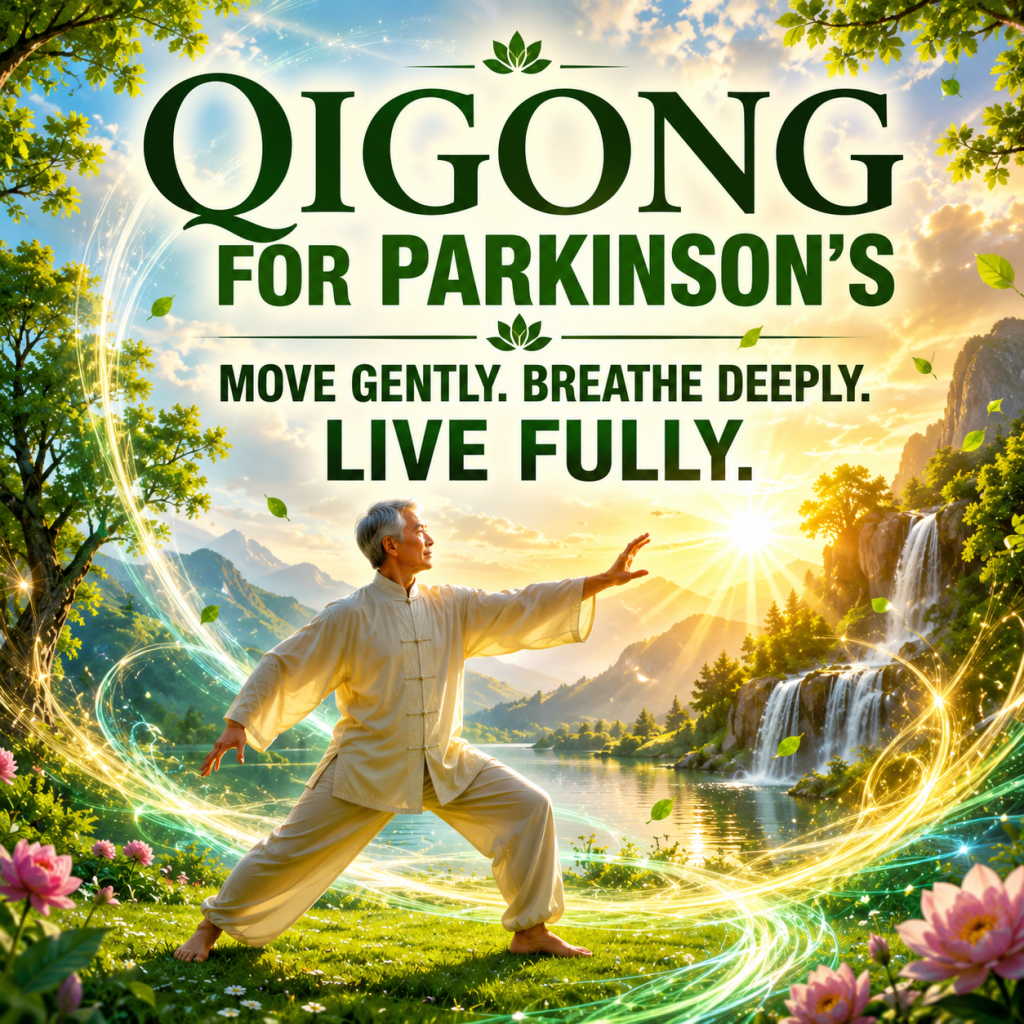
That is one reason why Qigong has become increasingly popular among people living with Parkinson’s. This ancient Chinese practice combines slow movements, mindful breathing, and focused awareness to cultivate Qi (life energy), helping practitioners improve mobility, reduce stress, and reconnect with a sense of confidence in their own bodies.
While Qigong is not a cure for Parkinson’s, growing research suggests it may improve balance, walking ability, flexibility, posture, and overall quality of life when practiced consistently alongside conventional medical care.
Why Qigong Works So Well for Parkinson’s
From a Traditional Chinese Medicine (TCM) perspective, Parkinson’s is often associated with patterns involving Liver Wind, Kidney Essence deficiency, Qi stagnation, and reduced circulation of Blood. Rather than chasing individual symptoms, Qigong gently nourishes the whole system, helping restore smoother movement throughout the body.
Modern neuroscience also supports many of these benefits. Slow, intentional movement stimulates the nervous system, improves proprioception (your body’s awareness in space), enhances coordination, and encourages neuroplasticity—the brain’s remarkable ability to build new pathways throughout life.
Regular practice may help:
- 🌿 Improve balance and reduce fall risk
- 🌿 Increase walking confidence and stride length
- 🌿 Reduce muscle stiffness and rigidity
- 🌿 Improve posture and body awareness
- 🌿 Support breathing efficiency
- 🌿 Reduce anxiety and stress
- 🌿 Improve sleep quality
- 🌿 Enhance overall emotional well-being
The Power of Going Slower
One of the greatest lessons Parkinson’s teaches is that slower is not weaker. In Qigong, slow movement allows the nervous system to organize itself more efficiently. Every deliberate shift of weight becomes an opportunity for the brain to strengthen communication with the muscles.
Joe Moody often reminds students during his Walk ‘n Talks how emotions are crucial to our overall health. Traditional Chinese Medicine has understood this for thousands of years. When fear, frustration, or hopelessness dominate our inner landscape, they influence not only our mood but also our physical vitality. By calming the breath and quieting the mind, Qigong helps create the internal conditions where healing becomes more possible.
Emotions Matter More Than Most People Realize
At Club Qigong, we often say that emotions are the bridge between the body, mind, and spirit. TCM teaches that every emotion influences the organs and energetic pathways. Parkinson’s can understandably bring fear, uncertainty, and frustration, yet cultivating gratitude, joy, patience, and self-compassion may help support both emotional resilience and physical recovery.
As we gently slow down, breathe with intention, and listen inwardly, we remember something profound: healing is not always about eliminating disease. Sometimes healing means rediscovering peace within the journey itself.
Qigong Meditations for Parkinson’s: Calm, Balance & Better Sleep
A curated collection of guided qigong meditations for people living with Parkinson’s — supporting mindful movement, a calmer nervous system, restorative sleep, and emotional wellbeing. Each title links directly to the meditation.
🚶 Meditation for Movement & Body Awareness in Parkinson’s
Gentle practices that support balance, gait, and awareness of muscle tension — key areas of focus for Parkinson’s mobility.
- Mindful Walking Exercise – Walk with Your Qi — Gentle walking meditation pairing breath with gait, useful for balance and mindful movement.
- Blissful Body Scan (Voice Only, extended) — Builds body awareness and releases muscle tension and rigidity.
- Body Scan with Music — The same body-scan practice with music, for those who relax more easily with sound.
🫁 Breathing Meditations to Calm the Nervous System
Stress and anxiety can amplify Parkinson’s symptoms like tremor — these breathwork and stillness practices help settle the nervous system.
- Breathe & Rise into Your Higher Self — Breathwork to settle the nervous system, which can ease stress-related tremor amplification.
- Pure Awareness – Tibetan-style Inner Peace Journey — A stillness practice for deep mental calm.
- Beginner’s Meditation with Joe — Accessible entry point if meditation is new or focus is difficult.
🌙 Sleep Meditations for Parkinson’s-Related Sleep Problems
Disrupted sleep is one of the most common non-motor challenges of Parkinson’s — these guided sleep meditations promote deeper, more restorative rest.
- Higher Self Sleep Meditation — Guided nighttime meditation for deeper, more restorative sleep.
- Healing Solfeggio Music + Affirmations — Frequency-based soundscapes for relaxation while resting or sleeping.
💛 Guided Meditations for Mood & Emotional Wellbeing
Low mood and emotional heaviness often accompany Parkinson’s — these affirmation-based meditations help lift spirits and build resilience.
- Depression to Joy – Sleep Meditation — Affirmation-based meditation aimed at lifting mood and building emotional resilience.
- Emotional Freedom: A Cosmic Journey to Inner Peace — Guided journey for releasing stress and emotional heaviness.
🪷 Qigong Energy Work for Vitality
Rooted in traditional Chinese medicine, this energetic practice offers a gentle recharge for body and mind.
- Chakra Balancing – Energetic Purge and Recharge — A 20-minute energetic recharge with Joe, in the medical qigong tradition.
Continue Your Journey
Joe Moody and Melissa founded Club Qigong to make authentic Qigong accessible for modern life. With more than 35 years of combined experience studying under various masters, they have helped thousands of students discover how gentle daily practice can transform health, energy, and outlook.
If you’re looking for a complete step-by-step program, explore our Qigong Courses, including our popular Qigong for Health and Vitality training, which teaches foundational practices like the Eight Brocades, breathing methods, standing meditation, and much more.
Every small movement matters. Every mindful breath matters. Every day you practice is another opportunity to cultivate resilience, nourish your Qi, and awaken the remarkable healing intelligence already within you.
Access Your Free Qigong Flow & Meditation with Joe by Joining Our Newsletter